Meet The Guy Who Helped Google Beat Apple’s Siri

Google's Jeff Dean

Google’s Jeff Dean

From my Forbes blog:

For all the attention lavished on Siri, the often-clever voice-driven virtual assistant on Apple’s iPhone, Google’s mobile search app lately has impressed a lot more people. That’s partly thanks to Google Now, its own virtual assistant that’s part of that app, which some observers think is more useful than Siri.

But the success of Google’s mobile search stems at least as much from a big improvement over the past year in Google’s speech recognition efforts. That’s the result of research by legendary Google Fellow Jeff Dean and others in applying a fast-emerging branch of artificial intelligence called deep learning to recognizing speech in all its ambiguity and in noisy environments. Replacing part of Google’s speech recognition system last July with one based on deep learning cut error rates by 25% in one fell swoop.

As I wrote in a recent article on deep learning neural networks, the technology tries to emulate the way layers of neurons in the human neocortex recognize patterns and ultimately engage in what we call thinking. Improvements in mathematical formulas coupled with the rise of powerful networks of computers are helping machines get noticeably closer to humans in their ability to recognize speech and images.

Making the most of Google’s vast network of computers has been Dean’s specialty since he joined Google an almost inconceivable 14 years ago, when the company employed only 20 people. He helped create a programming tool called MapReduce that allowed software developers to process massive amounts of data across many computers, as well as BigTable, a distributed storage system that can handle millions of gigabytes of data (known in technical terms as “bazillions.”) Although conceptual breakthroughs in neural networks have a huge role in deep learning’s success, sheer computer power is what has made deep learning practical in a Big Data world.

Dean’s extreme geekitude showed in a recent interview, when he gamely tried to help me understand how deep learning works, in much more detail than most of you will ever want to know. Nonetheless, I’ll warn you that some of this edited interview still gets pretty deep, as it were. Even more than the work of Ray Kurzweil, who joined Google recently to improve the ability of computers to understand natural language, Dean’s work is focused on more basic advances in how to use smart computer and network design to make AI more effective, not on the application to advertising.

Still, Google voice search seems certain to change the way most people find things, including products. So it won’t hurt for marketers and users alike to understand a bit more about how this technology will transform marketing, which after all boils down to how to connect people with products and services they’re looking for. Here’s a deeply edited version of our conversation:

Q: What’s “deep” about deep learning?

A: “Deep” typically refers to the fact that you have many layers of neurons in neural networks. It’s been very hard to train networks with many layers. In the last five years, people have come up with techniques that allow training of networks with more layers than, say, three. So in a sense it’s trying to model how human neurons respond to stimuli.

We’re trying to model not at the detailed molecular level, but abstractly we understand there are these lower-level neurons that construct very primitive features, and as you go higher up in the network, it’s learning more and more complicated features.

Q: What has happened in the last five years to make deep learning a more widely used technique?

A: In the last few years, people have figured out how to do layer-by-layer pre-training [of the neural network]. So you can train much deeper networks than was possible before. The second thing is the use of unsupervised training, so you can actually feed it any image you have, even if you don’t know what’s in it. That really expands the set of data you can consider because now, it’s any image you get your hands on, not just one where you have a true label of what that image is [such as an image you know is a cheetah]. The third thing is just more computational power. …

Read the full interview.

Interview: How Ray Kurzweil Plans To Revolutionize Search At Google

Google's Ray Kurzweil (Photo: Wikipedia)

Google’s Ray Kurzweil (Photo: Wikipedia)

From my Forbes blog:

When Google announced in January that Ray Kurzweil would be joining the company, a lot of people wondered why the phenomenally accomplished entrepreneur and futurist would want to work for a large company he didn’t start.

Kurzweil’s answer: No one but Google could provide the kind of computing and engineering resources he needed to fulfill his life’s work. Ever since age 14, the 65-year-old inventor of everything from music synthesizers to speech recognition systems has aimed to create a true artificial intelligence, even going so far as to predict that machines would match human intelligence by 2029.

Now, as a director of engineering at Google, he’s focusing specifically on enabling computers to truly understand and even speak in natural language. As I outlined in a recent story on deep learning–a fast-rising branch of AI that attempts to mimic the human neocortex to recognize patterns in speech, images, and other data–Kurzweil eventually wants to help create a “cybernetic friend” that knows what you want before you do (that is, if someone else doesn’t get to it first).

Indeed, Kurzweil’s focus is timely from a competitive standpoint as well. Google upped the ante on Apr. 29 by bringing its Google Now voice search app to the iPhone and iPad, in direct competition with Apple’s Siri. And Facebook just revealed that it built a natural-language interface for its Graph Search service announced earlier this year. It’s becoming clear that search is already starting to move beyond the “caveman queries” that characterized effective search techniques until recently.

In a recent interview I conducted for the story, Kurzweil revealed a surprising amount of detail about his planned work at Google. No doubt the nature of that work will evolve as he settles in at the company, but so far, this interview provides possibly the deepest look so far at his plans.

At least initially, that work won’t relate directly to advertising. But marketers will need to understand how profoundly Kurzweil’s and others’ work at Google could change not only what search will become in the age of more and more intelligent machines, but  the way we interact with information and even each other. All that is sure to mean big changes in the nature of advertising and marketing–well before 2029.

Q: In your book, How to Create a Mind, you lay out a theory of how the brain works. Can you explain it briefly?

A: The world is hierarchical. Only mammals have a neocortex, and the neocortex evolved to provide a better understanding of the structure of the world so you can do a better job of modifying it to your needs and solving problems within a hierarchical world. We think in a hierarchical manner. Our first invention was language, and language is hierarchical.

The theory behind deep learning, which I would call hierarchical learning, is that you have a model that reflects the hierarchy in the natural phenomenon you’re trying to learn. If you don’t do that, it’s going to be much weaker and fooled by apparent ambiguities.

Q: How will you apply that theory at Google?

A: What I’ll be doing here is developing hierarchical methods specifically aimed at understanding natural language, extracting semantic meaning … actually developing a way to represent and model the semantic content of documents to do a better job of search and answering questions.

An increasing percentage of queries to Google are in the form of questions. The questions right now can’t have an indefinite complexity to them. But if we can actually model language in a hierarchical fashion, we can do a better job of answering questions and doing search in general, by actually modeling what all these billions of web pages are trying to say. …

Read the rest of the interview.

This Is How Google (And Its Advertisers) Will Really Get Inside Your Head

HAL9000

From my Forbes blog:

Google cofounder Sergey Brin said only half-jokingly back in 2002 that his company aimed to create the equivalent of the intelligent computer HAL 9000 in 2001: A Space Odyssey, but without the bug that resulted in it, you know, killing people.

More than a decade later, Google isn’t nearly there, for better or worse. But lately, it has been aiming much more directly at building HAL, or what’s sometimes called the Google Brain. As I wrote in a recent article, a fast-emerging branch of artificial intelligence called deep learning is helping Google and other companies and researchers produce significant advances in machines that at least approach the way we think. It won’t be long–for better or worse–before their work also has a profound impact on marketing and advertising as well. …

Read the rest of the analysis.

Deep Learning: Artificial Intelligence Finally Gets Smart

building.a.brain-tr

From my feature story in Technology Review:

When Ray Kurzweil met with Google CEO Larry Page last July, he wasn’t looking for a job. A respected inventor who’s become a machine-intelligence futurist, Kurzweil wanted to discuss his upcoming book How to Create a Mind. He told Page, who had read an early draft, that he wanted to start a company to develop his ideas about how to build a truly intelligent computer: one that could understand language and then make inferences and decisions on its own.

It quickly became obvious that such an effort would require nothing less than Google-scale data and computing power. “I could try to give you some access to it,” Page told Kurzweil. “But it’s going to be very difficult to do that for an independent company.” So Page suggested that Kurzweil, who had never held a job anywhere but his own companies, join Google instead. It didn’t take Kurzweil long to make up his mind: in January he started working for Google as a director of engineering. “This is the culmination of literally 50 years of my focus on artificial intelligence,” he says.

Kurzweil was attracted not just by Google’s computing resources but also by the startling progress the company has made in a branch of AI called deep learning. Deep-learning software attempts to mimic the activity in layers of neurons in the neocortex, the wrinkly 80 percent of the brain where thinking occurs. The software learns, in a very real sense, to recognize patterns in digital representations of sounds, images, and other data.

All this has normally cautious AI researchers hopeful that intelligent machines may finally escape the pages of science fiction. Indeed, machine intelligence is starting to transform everything from communications and computing to medicine, manufacturing, and transportation. The possibilities are apparent in IBM’s Jeopardy!-winning Watson computer, which uses some deep-learning techniques and is now being trained to help doctors make better decisions. Microsoft has deployed deep learning in its Windows Phone and Bing voice search. Says Peter Lee, head of Microsoft Research USA, “Deep learning has reignited some of the grand challenges in artificial intelligence.” …

Read the full story.

Real-Time Advertising Has Arrived, Thanks To Oreo And The Super Bowl

oreoad

From my Forbes blog:

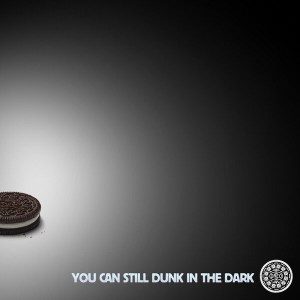
One of the best ads during the Super Bowl yesterday didn’t exist until well after the game started–and didn’t even run on television. It was Oreo’s ad, which was embedded in a tweet made during the half-hour blackout in the third quarter.

What made it among the best ads of the game wasn’t flashy video–it was a static photo, of all things–nor did it feature celebrities, cleavage, or wise-cracking babies. It was special mainly because it was created on the fly and ran immediately.

This was real-time advertising–not just that algorithmic stuff spewed out by innumerable ad networks that track you all over the Web, but a real real-time ad that was elegant, clever, brand-specific and most of all, of course, timely. Something happened while everyone was tuned in, a brand ginned up an ad that incorporated that something, and the ad ran–all in minutes.

This could be a very big deal. There’s so much noise in advertising today that it’s tough to break through with a brand message. Targeting, especially in online advertising, clearly works and, if privacy concerns don’t get in the way, will work better with each passing year. But ever-narrower targeting, no matter how precise, isn’t really what most brands, which need to reach people by the millions, are looking for. That’s why they still spend the bulk of their ad budgets on TV ads.

Real-time ads could help free up more of those dollars from TV. Too often, marketers and agencies ignore an advantage that active websites–particularly social services such as Twitter and Facebook–share with live television: the ability to reach a lot of people with a message that’s relevant to them right now. …

Read the rest of the post.

With Graph Search, Can Facebook Kill LinkedIn, Yelp–Even Google?

DSC00202

Facebook CEO Mark Zuckerberg introduces Graph Search (Photo: Robert Hof)

From my Forbes.com blog The New Persuaders:

Facebook took pains today to tell the world that its new social search serviceGraph Search, is only a very limited tool that it will roll out very slowly over a period of months and years.

But CEO Mark Zuckerberg and his search staff couldn’t help but reveal their enthusiasm for the vast possibilities. For all their professed modesty, what struck me at the company’s press event introducing the service was how specific and broad-ranging Zuckerberg and his Graph Search leaders were about what it could provide: just about everything, potentially, that every company from LinkedIn to Yelp to Foursquare to Match.com to … yes, even Google provides today.

That’s an exaggeration, of course, that even Facebook folks surely didn’t intend. All of those companies have distinct, well-developed services with extensive user bases that are unlikely to shrivel up no matter how good Graph Search turns out to be. In most cases, they will probably retain a durable advantage for years to come. And as Zuckerberg said, it’s very, very early for Facebook search, and search is a devilishly complex discipline to do well.

Still, to hear it from Facebook itself, Graph Search will offers ways to provide similar services, sometimes in potentially easier and more effective ways:

* Recruiting: One of the first examples Facebook provided today was that Graph Search could help in finding qualified candidates for jobs. For instance, Lars Rasmussen, the Facebook director of engineering who heads the Graph Search team, mentioned that he could find people from NASA Ames Research Center who are friends of Facebook employees.

As investors, who bid up LinkedIn’s share a fraction today, no doubt recognize, that company has a pretty good if not exclusive hold on recruiters. And given that finding friends who worked somewhere is a rather specific subset of qualified candidates for a position, there’s not much chance recruiters will abandon LinkedIn for Facebook anytime soon. But Facebook, already used in various ways by recruiters, could siphon off activities that might otherwise have gone to LinkedIn. … Read more at The New Persuaders. But to conclude …

No, Facebook won’t kill any of these companies, certainly not anytime soon. They’re too strong, Facebook has too much still to build and then to prove, and rarely does a company kill another healthy company no matter how good its products are.

Investors may be thinking as much, as they sold Facebook shares to the tune of a 2.7% drop in price today. But if anyone doubted Facebook’s ability to keep disrupting the status quo, they surely shouldn’t doubt it anymore. Even with its baby steps into the search business, Facebook has again set new terms of engagement in the battle for the soul, or at least the cash register, of the Internet.

Why Are TV Makers Pushing Cadillacs When We Really Want Ferraris?

US-IT-CES-ELECTRONICS

Samsung shows off huge new TV (Photo: AFP/Getty Images via @daylife)

Are TV makers going the way of Detroit in the 1960s? In what many, including those who didn’t bother to attend, are calling a boring Consumer Electronics Show, the star attractions seem to be leviathans such as Samsung’s and Sony’s new 84-inch TV sets. Even they apparently is not amazing enough, because Samsung is promising a 110-inch model later this year.

Size isn’t the only way they’re big, either. Those 84-inchers, which one Sony executive had the audacity to call “Ferraris,” costs $25,000, more than I will ever pay for a car, let alone a TV. And they have more pixels than my never-acute eyesight can ever process–even if there were content created for them, which there isn’t.

Seriously, guys, I’m not buying another TV for a very long time. The screen I’ve got is as big as I can fit in my living room, and that’s not going to change. Even if I did have a bigger living room, a big-ass 84-inch TV would feel faintly embarrassing, like tractor tires on a little pickup.

What’s more, not a single Smart TV feature, no matter how cool, is going to sway me to pony upwards of a thousand dollars for a new set to replace a perfectly fine screen. I’ve got TiVo, I’ve got Apple TV, I’ve got Roku, I’ve got Google TV, and probably there’s some other add-on device I can’t even remember. All of them offer more features and apps than I will ever use.

All of this makes me think of those road hogs of the late 1950s and early 1960s that Detroit insisted on manufacturing shortly before those cheap little imports ate their lunch. The fact is that more and more TV watching is occurring on much smaller screens, especially tablets. The sofa spuds of today don’t drive Cadillacs. We want Ferraris, or even Priuses. …

Read the rest of the post at The New Persuaders.

13 Questions For 2013 In The World Of Online Advertising

questionsCross-posted at my Forbes.com blog The New Persuaders:

For the past few years, I’ve offered predictions here and on The New Persuaders for what’s likely to come in the next year. This year, I’m going to shake it up and throw out a few questions instead. I think I know the answers to some of them, but if many won’t be answered definitively by year-end, they remain top of mind for me and probably for many others in online media and advertising.

So in this, the first full week of the new year, here are some questions to which I hope to start finding answers:

* Will image advertising finally take off online? I have to believe that as people spend more and more time online instead of reading print publications and watching TV, brand marketers will want and need to reach them there with ads that are aimed at creating consideration for later purchases, not just eliciting an immediate sale like Google’s search ads and too many banner ads. We’re already starting to see signs of such advertising with the early success of Facebook’s Sponsored StoriesTwitter’s Promoted Tweets, and YouTube’s TrueView ads–not to mention the explosion of tablets, which provide a lean-back experience more compatible with image advertising. This won’t be a sudden change, since brand marketers and agencies don’t move quickly, but you can’t tell me there aren’t going to be increasingly compelling ways for brands to influence people online.

* Can advertisers and publishers make ads more personal without scaring people? That’s the $64 billion question, and it likely won’t get answered in full this year. It’s easy for headline-hungry politicians to make a big deal out of Facebook’s latest privacy gaffe or the Wall Street Journal’s or the New York Times’ latest scare story about an ad that followed somebody all over the Web. That’s especially so since Facebook really does push the privacy envelope too far at times, and too many advertisers idiotically chase one more sales conversion at the cost of scaring off hundreds of others or inviting onerous legislation. But making ads more useful to each individual person is not only crucial to online commerce, it’s potentially better for most consumers as well–seriously, I don’t need to see another ad for a fitness center or a new credit card, but that ad for Camper van Beethoven’s new CD had me in a split-second. The answer lies in these two words, everyone: transparency and choice.

* Will mobile advertising work? Well, some of it already does, to hear Google and Facebook tell it. And while those already devalued digital dimes so far turn to pennies when it comes to ads on smartphones and tablets, this still feels more like growing pains than a crisis in online advertising. Sure, the screens are small and people don’t like to be interrupted in their mobile cocoons. So a different kind of advertising is probably needed–clearly, banners don’t cut it on a four-inch screen. But the value to advertisers of knowing your location and maybe the apps you’re using, coupled with knowledge of what your friends like–all with permission, of course–is huge. That permission may be really tough to earn. But if advertisers can offer tangible value, perhaps in the form of useful services related to what you’re doing or looking for or shopping for–and isn’t that the ultimate native ad?–people may loosen their hold on that information.

I have a lot more questions, but I’ve got to stop before too much of 2013 is gone.

Check out more questions at the full post.

The Mythical iTV: Steve Jobs’ Marketing Magic Is Still Alive And Well At Apple

From my Forbes.com blog The New Persuaders:

Image representing Steve Jobs as depicted in C...

Image via CrunchBase

Another day, another rumor that an Apple television may be coming.

Another recycled rumor, in fact. The Wall Street Journal reported this morning that China’s Foxconn, a major Apple supplier, is helping Apple test some prototypes for a large-screen television set. That follows similar (OK, identical) rumors a couple of days ago, last August, last May, and last December saying that Apple was enlisting Chinese suppliers to create an Apple TV set.

No surprise here, given that Apple CEO Tim Cook managed to stoke the fires of speculation last week by saying the company has “intense interest” in television. Of course, Cook himself said the very same thing last May, too.

So don’t hold your breath for an Apple TV that goes beyond the current Apple TV hockey puck. Even longtime Apple television forecaster Gene Munster at Piper Jaffray now says it won’t come before next November. And even then, it’s debatable how important a product it will be, since it’s widely assumed that Apple can’t add much to the current TV experience without deals to get access to live TV shows, or at least win the right to revamp the TV user interface to encompass the full range of pay-TV and Internet content available today. And those deals are nowhere in sight just yet.

But the new flurries of interest in the mythical machine point up something that should reassure Apple investors, at least: Apple cofounder Steve Jobs’ famous marketing magic is still at work at the company more than a year after his death.

Some investors have been worried about whether Cook, by all accounts an ace operations guy but not a showman like Jobs (as no one else really is, honestly), can keep Apple’s brand as blindingly shiny as it has been for so many years now. It’s time to give Cook credit for faithfully following Jobs’ playbook: Let fans wax on about how desirable a new Apple product will be, building demand to a fever pitch so that whatever comes out is guaranteed to get unparalleled attention. Indeed, a recent survey says they’re already willing to pay considerably more for an Apple TV–whatever it turns out to be.

No, Cook doesn’t yet deserve to be considered a master marketer like Jobs. But he’s off to a pretty good start.

Sorry, Retailers–Cyber Monday’s Days Are Numbered

Two cliches in one ad!

From my Forbes.com blog The New Persuaders:

Not long after Cyber Monday was invented in 2005 as an online alternative to Black Friday, I called it a “marketing myth” because it was actually not even close to a top holiday shopping day.

Then a funny thing happened–Cyber Monday, created by the National Retail Foundation’s Shop.org online unit, became a self-fulfilling prophecy as retailers jumped on the term and began offering special sales that day after the Thanksgiving holiday. By the following year, it had turned into a real phenomenon, at least for many retailers, and last year it became the heaviest shopping day ever to date. It might even happen again this year.

But now, even as many retailers have made Cyber Monday sales a stock part of their holiday strategy, I’m betting its days are numbered. Why?

* Early sales. Smart retailers noticed that before Cyber Monday, at least (and perhaps still), the period leading up to the big day actually were even more active shopping days. And in their never-ending attempt to get a step ahead of rivals, many retailers ran not just pre-Cyber Monday sales, but pre-Black Friday sales as early as the evening before Thanksgiving. Apparently they worked. They almost certainly will cannibalize Cyber Monday sales. …

Read the complete post at The New Persuaders.