Display Ads As Compelling As TV Spots: A Conversation With Google VP Neal Mohan

From my Forbes blog:

In the lobby of Google’s Building 900 at its Mountain View headquarters, there’s a display of Google-colored squares and rectangles that looks like a bland abstract-art piece. It turns out these are the shape and relative size of standard display-ad units that run on nearly every commercial website.

The “display” display exposes the paradox of Google’s attempt to extend its dominion over online ads to the realm of image advertising done chiefly on television and in glossy magazines. To get the wide reach of television, the company needs to shoehorn image ads into those standardized, easy-to-buy units, but it also needs to provide technology that allows marketers to do more compelling pitches inside those boxes. Resolving that paradox is the job of Neal Mohan, Google’s vice president of display ads.

After joining the company with the $3.2 billion acquisition of display technology firm DoubleClick in 2007, Mohan has helped build or buy what’s likely the industry’s broadest set of technologies needed to create, place, and measure the impact of display ads. In an extensive interview for a story in the current issue of Forbes, we talked about how he and hundreds of engineers in Mountain View and New York City are trying to apply that technology to wrest billions of brand advertising dollars from TV. This is an edited version of our conversation.

Google VP Neal Mohan

Google VP Neal Mohan

Q: Could you lay out the key challenges today in getting more brand advertising to move online?

A: The primary use case for advertisers online is generally performance-oriented. That applies not just to search advertising but frankly to display, and even video ads have been performance-oriented. That’s done the industry well. There’s been a lot of growth around impressions and clicks and conversions.

But the next big opportunity for the industry if we are going to grow it not just X percent a year but 10X over the next few years is to crack this brand advertising nut. It’s not about display banners or text ads or rich media or video or mobile. It’s really about all of the above, and what the objectives of the brand advertiser are. It’s more upper-funnel campaigns where brands are looking to establish their brand or a new product that they’re looking to bring to market.

Q: Why the focus on brand advertising now?

A: There are a couple of things coming together that make this the right time for this opportunity to be addressed. The first is just the fundamental consumer trend. Fifty-seven percent of media consumption is online now, greater than any other channel combined, including television. …

Read the complete interview.

Look Out, Television: Google Goes For The Biggest Advertising Prize Of All

Google's BrandLab at YouTube headquarters

Google’s BrandLab at YouTube headquarters

From my Forbes magazine feature story:

IT’S MID-SEPTEMBER, and Volkswagen of America has a problem: It won’t have any new models coming out until the spring. Keeping VW front and center in consumers’ minds has drawn a group of marketing folks from the automaker and two of its ad agencies to Google’s BrandLab at its YouTube headquarters south of San Francisco. Dedicated to “evangelizing the art and science of brand-building,” the richly appointed meeting space is basically a man cave for ad creatives, complete with overstuffed couches, booze and the mother of all big screens, an assemblage of 32 flat-panel displays massed into 300 square feet of video overload.

In one corner of the BrandLab, Google’s Jeff Rozic goes to work running VW’s folks through a rapid-fire succession of video ad campaigns the BrandLab feels have worked. His earnest delivery is well-honed, courtesy of 100-plus similar “private workshops” held for potential advertisers from Coca-Cola to Toyota over the past year. VW has some catching up to do, a point Rozic makes intentionally or not by highlighting 13 travel vignettes produced by a rival, Nissan Mexico. His larger point: Don’t clutter a story with too blatant a call to action. “We shouldn’t apologize for trying to sell cars,” one VW exec protests. “Sure,” Rozic shoots back, “but you have to be careful to distinguish when you’re telling a story and when you’re selling.”

Fair point. Rozic is clearly selling–and it’s a product intended to change Google’s path. The king of the click is now lecturing one of the world’s most accomplished advertisers to forget those clicks and amp up the image ads. CEO Larry Page can go on as much as he wants about self-driving cars, wearable computers or any of the company’s other “moon shots.” But Google fundamentally remains the most disruptive advertising company of the past half-century. As its total advertising-revenue growth rate has halved in the past two years, from 29% to 15% (thanks in part to Facebook and Twitter), it’s now charging full-bore toward the biggest pot of advertising gold it doesn’t own: brand advertising, the image ads you see in glossy magazines and on television.

Most online ads–the banners that litter nearly every commercial website and, most notably, Google’s search ads–have failed to help marketers move the needle on classic advertising measures like brand awareness and intent to purchase. Instead, they mainly drive people to a product page to click the buy button. Direct marketing is lucrative: Search is still upwards of 60% of Google’s ad revenue, helping it earn an estimated 15.8% net margin in 2013–but image ads will come to dominate digital advertising in this decade.

Look at the numbers: Digital brand advertising is an $18 billion market this year, according to eMarketer. Its forecast implies that number will double by 2018, at which point it will have passed search and direct marketing, with plenty of room to grow. Television advertising, comprising almost entirely image ads, is currently a $200 billion global market. And it’s a vulnerable one, as the medium’s iron grip on the bulk of ad spending looks a little less firm as younger people scatter to YouTube and Netflix when they aren’t Snapchatting or Instagramming on iPhones or skipping ads entirely on their DVRs. Some 75% of respondents to an Interactive Advertising Bureau poll of 5,000 ad execs expect to see some spending move from TV to digital video in the next year.

This explains the man cave. YouTube remains one of the greatest acquisitions of the Internet era. Larry and Sergey paid $1.65 billion in 2006 for a business that today would conservatively be worth $20 billion as a stand-alone. So what’s another $400 million or so to build out a brand ad business? …

Read the rest of the story.

Why You Won’t Really Mind Facebook’s Coming Video Ads

From my Forbes blog:

Nobody outside a few advertising partners has even seen Facebook’s coming video ads, but already the sky is falling. Critics are labeling the social network a “super troll” (whatever that means) for its plan to “blast” the “intrusive” ads into news feeds and predicting that the ads will annoy users so much that they’ll be driven away.

That’s doubtful. Here’s why:

* There won’t be all that many of them. Despite complaints about the increasing ad load, you can still scroll through many screens before you encounter more than an ad or two. You can bet that Facebook will be very careful about letting advertisers run too many of these things. Anyway, relatively few advertisers will be allowed to run them or, at $2 million for a day, afford them.

* You’re already seeing video ads on Facebook anyway. Marketers have been creating video posts on their Facebook page and then running those posts as ads. So it’s not as if these new video ads are all that new. The new part is that they will play automatically. “We’d note that we’ve personally been seeing autoplay video in our newsfeed on desktop recently, and been pleasantly surprised that it actually improves the user experience, in our view,” Macquarie Securities analyst Benjamin Schachter said in a note to clients today. “The auto-play feature is relatively unobtrusive and calls our attention to the video without expanding over other content or playing audio. We can see how it could increase video views on Facebook meaningfully.” …

Read the rest of the post.

What The Heck Will Google Do With These Scary Military Robots?

From my Forbes blog:

Let’s see, we have a company that already knows everything about us, has possibly the world’s largest computer network, has recently built one of the biggest artificial-intelligence teams in the world–a company so powerful that it feels the need to soften its dominance with the informal motto, “Don’t be evil.”

And now Google–yes, of course we’re talking about Google–has bought a military robot company call Boston Dynamics. Not just any robot maker this time–after all, it has already quietly bought seven others over the past year, apparently to provide former Android chief Andy Rubin another chance at a moonshot project. No, unlike the other robot makers, this company makes machines by the names of BigDog, Atlas, and Cheetah that can variously outrun Usain Bolt and hurl cinderblocks 17 feet.

So, we’ve got the potential for killer robots that know where you live and can outrun you when they find you. What’s not to like?

All jokes about Skynet, Terminators, and Robocops aside, the latest acquisition raises a serious question about what Google has in mind. It looks for all the world like it’s pursuing yet another seemingly crazy side project that has nothing to do with its mission to organize the world’s information and make it universally accessible and useful. It’s now trying out self-driving cars, home package delivery, wearable computers, and anti-aging technologies.

Clearly it’s time for Google to update its mission statement, not to mention the “Ten things we know to be true,” a list that includes such outdated gems as “It’s best to do one thing really, really well.” …

Read the rest of the post.

AI Startup Vicarious Claims Milestone In Quest To Build A Brain: Cracking CAPTCHA

From my Forbes blog:

Can machines think? Not yet. But there is one at least partial test: the CAPTCHA, or “Completely Automated Public Turing test to tell Computers and Humans Apart,” those distorted characters you have to type into a website that wants to repel automated programs from spamming or making comments in blogs. Because CAPTCHAs by definition are intended to be recognizable only by humans, they’re widely considered one test of whether a machine can at least display a visual understanding close to that of people.

On Monday, the artificial intelligence startup Vicarious will release the results of a test, shown in a video, that it says shows its early prototype software can solve CAPTCHAs reliably. In particular, two of the three-year-old company’s cofounders, Dileep George and D. Scott Phoenix, say the AI software can solve Google’s reCAPTCHA, the most widely used test of a computer’s ability to act like a human being.

Vicarious team, with Phoenix (left) and George in foreground

Vicarious team, with Phoenix (left) and George in foreground

In the tests shown in the video, the system scans the CAPTCHA and presents a list of possible answers–often topped by the correct one. The company claims it gets 95% per letter on reCAPTCHA, and that it solves reCAPTCHA 90% of the time. That compares with essentially 0% for state-of-the-art algorithms cited in a Microsoft Research paper. Even a solve rate of 1% is considered to beat the CAPTCHA system.

It’s tough for outsiders to assess the company’s technology, since it’s keeping a tight lid on details. George and Phoenix even requested that its location, which is to the east of Silicon Valley, not be identified. When it was pointed out that this was revealed on its employment page, they promptly removed it. The secrecy is understandable, especially given that bad guys who want to beat CAPTCHAs would love to see what they’re doing. …

Read the rest of the story.

Exclusive: Media Trading Startup MediaCrossing Aims To Shake Up Online Advertising

From my Forbes blog:

The hottest trend in online advertising today is the rapid automation of ad sales through exchanges like those run by Google, Yahoo, and Facebook. This so-called programmatic trading works something like equities trading on a stock exchange like the Nasdaq, and it’s growing like crazy.

But to Bill Lederer‘s mind, the job was never finished. Lederer, former CEO of early e-commerce company Art.com and executive at the WPP-owned media, marketing, and data services firm Kantar, has just announced a $6 million Series A round of funding for a new company, MediaCrossing, that he claims will do just that. In the process, it also could disrupt a lot of existing players in the online ad business, from Google and Facebook to a raft of ad tech companies.

In an exclusive interview on the new company, founded with former Wall Street technologist and entrepreneur and MediaCrossing Chief Technology Officer Ted Yang, Lederer says the Stamford, Conn.-based company is the first true digital media trading company. “We take the best of Wall Street and the best of Madison Avenue and put it together in a trading business,” says Lederer. “We haven’t seen that yet.” …

Since Lederer isn’t opening up the inside workings of the technology (though you can get a little more detail here), and few outsiders have delved into it to offer an independent assessment, it’s difficult to assess his claim to have created something entirely new that will shake up the online ad industry. Jeff Zabin, founder and research director for information technology research firm Gleanster, who was briefed on the company’s plans, says MediaCrossing is “fundamentally changing the game for digital media buying.” …

Read the whole story.

Meet Hummingbird: Google Just Revamped Search To Answer Your Long Questions Better

google15bday1

From my Forbes blog:

Google has updated its core algorithm that controls the answers we get to queries on its search engine in a bid to make them work better for longer, more complex questions.

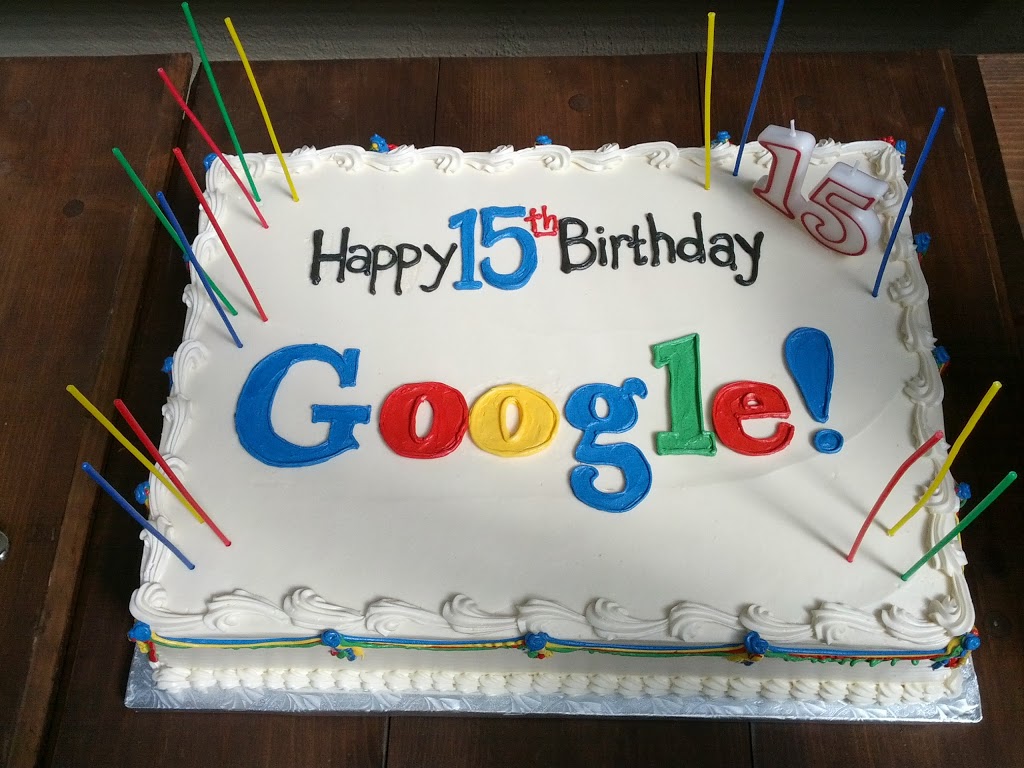
The update, code-named Hummingbird, is the biggest change to the underpinnings of the world’s leading search engine since early 2010, when Google upgraded its algorithm to one it called Caffeine. Google made the change about a month ago, it announced at a press event in the garage of the Menlo Park (Calif.) house where Google started. The event also celebrated the 15th anniversary of Google’s founding, which is tomorrow.

Most people won’t notice an overt difference to search results. But with more people making more complex queries, especially as they can increasingly speak their searches into their smartphones, there’s a need for new mathematical formulas to handle them.

This update to the algorithm focuses more on ranking sites for better relevance by tapping further into the company’s Knowledge Graph, its encyclopedia of 570 million concepts and relationships among them, according to Amit Singhal, Google’s senior VP of search. (For example, there’s a Knowledge Graph “card,” or information box, for the Eiffel Tower, and Knowledge Graph knows it’s a tower, that it has a height, that it’s in Paris, etc., so Google can anticipate you might want to know some of those facts.) Caffeine was more focused on better indexing and crawling of sites to speed results.

After the event, Scott Huffman, a key engineering director at Google currently working on natural language, told me that part of the impetus for the change was that as more people speak searches into phones, they’re doing so in a more natural way than they type in queries–which is to say more complicated. So Google’s search formulas needed to be able to respond to them.

Partly that is through even great use of the Knowledge Graph, so obvious discrete terms can be identified quickly. But it’s also interesting that although queries are getting more complex, that doesn’t always mean it’s harder to find the right answers. The more terms people use, Huffman says, the more context Google can divine. So those extra words, even if they’re in a more complex query, can give Google better information–but only if the algorithms are adjusted to be able to recognize the relationship among those terms.

Ultimately, he says, “we want to get to a natural conversation” between people and Google search on whatever devices they’re using. …

Read the rest of the story.

Jerry Yang’s Revenge: Yahoo Shares Top $31, The Price Microsoft Offered In 2008

Yahoo cofounder Jerry Yang

Yahoo cofounder Jerry Yang

From my Forbes blog:

Somewhere out there, Yahoo cofounder Jerry Yang must be shouting his company’s name for the first time in years.

That’s because Yahoo closed above $31 a share–by three pennies–for the first time since October 2007, a few months before Microsoft made a blockbuster offer to buy the company for that same price per share. And for all that current CEO Marissa Mayer has done to revive the long-dormant company, it’s finally worth giving Yang due credit for Yahoo‘s stock success for the past year–not to mention its very existence.

Investors can reasonably argue that Yahoo‘s shares were dead for years following Yang’s much-criticized intransigence against Microsoft‘s buyout offer. So simply because they’re now worth a few cents more than Microsoft initially offered (though still a little less than the $33 Microsoft later offered) doesn’t mean Yang’s decision was the right one at the time. Or even now, five years later, given where Yahoo investors’ money could have been better deployed. Google’s shares, for instance, while volatile over the years, are about 75% higher than in February 2008.

Still, at least in Silicon Valley, no small number of people at the time thought Yahoo deserved more than to become a unit of Microsoft. Really, does even the most bearish Yahoo investor think that the company would have been better off today–if it still existed–or that it would be producing more value to investors or users if it had been consumed by Microsoft back in 2008? It seemed apparent that whatever was left of Yahoo would slowly wither away inside a software giant that has never seemed committed to media, technology-powered or not. …

Read the rest of the post.

YouTube’s Prankster Engineer Keeps Google’s Video Site Humming

YouTube's Billy Biggs

YouTube’s Billy Biggs

From Forbes magazine’s annual innovators list:

You probably don’t know his name, but Billy Biggs is one of the people who has helped keep Google on Forbes’ list of the world’s most innovative companies.

In the third annual version of the list out today, Forbes highlights nearly a dozen next-generation innovators who are expected to create the products and services these companies will be counting on to remain innovation machines.

Biggs, a software engineer at YouTube since Google bought the video site in 2006, has had a hand in most of the major projects there already. But at just 35, he will be called upon to create many more. Overall, he says, his work is about “making sure the systems are built for the future and we’re able to build cool things”–even if he doesn’t yet know what they will be. Here’s a closer look at his work:

Billy Biggs likes to say pranks are his full-time job at YouTube, Google’s video service. For April Fool’s Day 2010, for instance, he and a few other software engineers created a new video display format called TEXTp. Ostensibly aimed at cutting network bandwidth costs, it turned YouTube videos into colorful streams of text characters.

Don’t let those hijinks fool you. Labeled a “hidden gem” by a former YouTube executive, Biggs has had a hand in nearly every major technical project there since Google bought it in 2006. His work as principal architect for YouTube’s computer systems and software and its website is credited with helping YouTube reach an industry-leading 6 billion hours of video a month viewed by more than a billion people.

That massive audience has put the site in a position to challenge television for consumer attention and marketer budgets–just as TV faces many new challenges to its reign as the world’s most popular entertainment medium. …

Read the rest of the story.

Why So Many People Are Mourning The Passing Of Doug Engelbart

From my Forbes blog:

Much of the latest generation of tech startups, and probably two generations before that, must wonder what’s with all the eloquent eulogies about Doug Engelbart, who died July 2 at age 88. He’s often called the father of the computer mouse, but he introduced the world to so much more that it’s hard to believe the innovations came from the mind of one man (thought it must be said, since he was a seminal proponent of computer-driven collaboration, that many colleagues added their own thinking and engineering to his vision).

Technologies that we still use today–videoconferencing, bitmapped displays, screen windowing, real-time text editing, hypertext that prefigured the World Wide Web, and, of course, the mouse–all were shown at what’s known as “the mother of all demos” at a computer conference in San Francisco in 1968. Steve Jobs, whose Apple Computer would refine and popularize many, but not all, of these technologies, was still a 13-year-old student at Cupertino Junior High.

I was fortunate enough to cross Engelbart’s path at least a couple of times, most recently at an event at Stanford University in late 2008 commemorating the 40th anniversary of that demo. The 1968 video of the demo still gives me tingles for the amazing breadth of technologies he and his colleagues marshaled at a time when computing was still done with punch cards fed into room-sized computers. If you haven’t seen it already, spend a piece of your holiday weekend checking it out.

But I was also blessed to have had a chance to interview him in person in 2003 for a story I wrote about my search for the next big thing in technology. I drove across the Dumbarton Bridge in the southern San Francisco Bay to Logitech, the maker of computer mice and other peripherals that provided him with an office. He seemed a little out of place at a company bustling with people a third his age.

Speaking softly but still with an urgent energy, Engelbart was generous with his time. As he sketched his latest thinking on his longtime quest to augment intelligence and speed up innovation of all kinds, I was alternately entranced and a little confused. I simply couldn’t get my arms around his “bootstrapping” vision of how to turbocharge innovation and raise our collective intelligence. I could tell he was a little frustrated not only with my struggles to understand, but also with what he viewed as the limited scope of innovation in latter-day Silicon Valley that he felt would benefit greatly from his ideas.

At some point, he sensed that my attention was flagging from the cognitive overload and decided to wind down the interview, though he offered with his unfailing politeness to follow up with me later as I continued my quest. I still regret not managing to get his thoughts into the story.

Unfortunately, I wasn’t the only one who couldn’t quite grok the fullness of his vision, and he never got much support to turn it into something with widespread practicality. As a close friend of his, futurist Paul Saffo, told me after I interviewed Engelbart and confessed I didn’t quite get what he was saying, it’s a curse to be 50 years ahead of your time. Whether that’s tragic, as Tom Foremski believes, I’m not sure. Engelbart certainly got the credit he deserved, at least later in his life, if not the riches that so many people who piggybacked on his ideas did.

We need more people like Engelbart who can stretch their minds beyond the here and now, who are brave enough to keep pushing even when they’re not understood. The upside of his overreaching is that perhaps we’ve still only scratched the surface of what Engelbart envisioned. I won’t be surprised if decades after his death, innovations that leverage his thinking will be continuing to transform the world.