Verizon’s Risky Bet on AOL’s Ad Business

From my story in MIT Technology Review:

In announcing plans to buy AOL for $4.4 billion, Verizon is betting that it can lead the future of television as it explodes from the living room to computers, smartphones, and tablets. But at least in the near term, it faces plenty of headwinds.

The deal, rumored earlier this year, catapults the largest provider of wireless Internet service into the media and advertising technology businesses, in direct competition with companies such as Google and Facebook. Already in the television business with its FIOS cable TV alternative, Verizon now has the potential to help advertisers reach specific audiences viewing online video and TV–still by far the most lucrative ad medium–on any screen. That’s something no other company has yet managed to do.

Although AOL is still known first for its declining but profitable dial-up Internet access business and second for owning prominent sites such as Huffington Post and TechCrunch, its growth is now driven chiefly by enabling the sale of ads–especially video ads–on other sites. The deal, expected to close this summer, would end AOL’s rocky history as an independent company, which began in the 1980s with its pioneering Internet access service and peaked in 2000 when it acquired Time Warner for $164 billion–later seen as one of the most disastrous mergers in corporate history.

Since then, the company has struggled to regain relevance. Under CEO and former Google executive Tim Armstrong for the past six years, it has attempted to build a media business; more recently, via acquisitions such as the 2013 purchase of video ad exchange Adap.tv, it has been cobbling together technologies to automate the sale of video advertising on other sites.

That ad tech business, whose revenues rose 19 percent in the first quarter, is probably what attracted Verizon more than AOL’s media business, which grew only 8 percent. Chairman and CEO Lowell McAdam said his company has been investing in advertising technologies that can reach consumers on any screen, from smartphones to computers to TVs. In fact, it’s expected to launch a service this summer that would bundle TV and video content into a cable TV alternative. …

Read the rest of the story.

Amazon’s ‘Risky’ Web Services ‘Distraction’ Finally Pays Off

bezosbet

From my Forbes.com blog:

When I wrote what was likely the first major magazine story about Amazon.com’s Web services business way back in November 2006, most people thought it was yet another crazy idea from CEO Jeff Bezos.

Heck, even most of my colleagues at the magazine thought I was crazy to bother writing about it. Understandably, many didn’t understand what I was talking about–selling access to Amazon’s huge cloud computing infrastructure for its own operations to outside companies–let alone believe that Amazon Web Services was sufficiently important to merit a cover story. “I have yet to see how these investments are producing any profit,” one analyst griped about the engineering and capital expenses involved. “They’re probably more of a distraction than anything else.”

Today, Amazon revealed just how big that “distraction” is. In its just-reported first-quarter earnings report, Amazon said AWS revenues have hit $5 billion on an annual basis. In the first quarter, revenues rose 49% from a year ago, to $1.57 billion.

Even more surprising, perhaps, it’s making money: $265 million in operating income, up from the $245 million it earned in the first three months of 2014.

That may not be seen as a positive by some investors. In the odd calculus of Wall Street, the more money AWS is losing, the better. That’s because, as Macquarie Securities analyst Ben Schachter wrote in a recent note to clients, it would indicate that Amazon’s main retailing business is more profitable.

Still, Amazon’s shares rose more than 15% in the next morning’s trading. That’s partly because, well, ultimately any profits are good profits.

And the growth of AWS, which now boasts more than 1 million active customers ranging from General Electric to every startup you’ve ever heard of, means it’s now a significant contributor to Amazon’s market value. Schachter values it at $75 billion, nearly half as much as the rest of Amazon’s business at $145 billion. …

Read the rest of the story.

Did Apple Flub The Timing Of The Apple Watch?

applewatches

From my Forbes blog:

The Apple Watch reviews are already in, and the verdict is pretty consistent: Apple’s long-awaited smartwatch looks great, but it’s slow, the interface is a little confusing, and too many of the apps are half-baked.

The decidedly mixed reviews are unusual for Apple, even for an entirely new product. I know there were people who panned the iPod and the iPhone when they were first released, but they were clearly idiots. This time, I’m not so sure.

In fact, the rather obvious and oft-mentioned negatives suggest that if another company had produced this smartwatch—impossible, since it doesn’t work unless you have an iPhone 5 or 6—the reviews would have been even more negative. Even the technorati seem unimpressed.

The muted enthusiasm—in some cases outright advice not to buy the current version—raises a central question: Did the company launch the Apple Watch, which will be available for pre-order Friday ahead of deliveries starting April 24, too soon? True, almost all the Apple Watch models were sold out within 30 minutes on Friday morning preordering, though as one story rightly puts it, “it is not clear whether this is due to relatively high demand or low production.” There were many reports in recent weeks about limited supplies, either because of manufacturing issues or because Apple was purposely limiting production.

Apple is sometimes criticized for being late to the party on some products, only to prove after it quickly kills most of the competition that its timing was actually perfect. A few people point out that the Apple Watch is also too late because other smartwatches and wearables from Samsung, Motorola, Fitbit and many others are already out. But a number of signs point to the opposite and very un-Apple-like problem: It’s too early.

Read the reasons why in the full post.

Google Glass May Not Be Dead, But It Sure Needs A Complete Overhaul

Google cofounder Sergey Brin wears Google Glass.

Google cofounder Sergey Brin wears Google Glass.

From my Forbes blog:

Google Glass is dead. Long live Google Glass.

That’s what Google Executive Chairman Eric Schmidt essentially insisted today in an interview with the Wall Street Journal. Actually, he specifically said it was still very much alive following January’s announcement that the Glass Explorer program was ending and Glass work moving from secret lab Google X to Google itself, under Tony Fadell, who heads Google’s Nest connected home division. Schmidt added that Glass will be the basis of “a big and very fundamental platform.”

But given how much it’s likely to be changed, Schmidt might have been better off pronouncing it dead. If new versions of Google Glass are to succeed, they need to change in a whole host of ways that literally will make it unrecognizable compared with the $1,500 version it sold to bleeding-edge people like me. After using it only intermittently for a year now, I think Schmidt is right that Glass could become a compelling product, but only if:

1) Google hides Glass behind actual glasses. No matter how elegant Google made Glass, that little block of plastic that serves as the screen is simply too weird-looking. In its current form, the device screams, “I’m a Glasshole.” Instead, as rumors indicate, Google will have to incorporate that screen into existing eyewear.

Read the rest of what Glass will need to be successful.

How Do You Google? New Eye Tracking Study Reveals Huge Changes

The classic "golden triangle" reader heat map

The classic “golden triangle” reader heat map

From my Forbes blog:

Google used to be criticized for providing little more than “10 blue links” in its search results that sent searchers to other sites. More recently, it’s getting lots of flack from companies and antitrust officials in Europe for the opposite–providing direct answers that make it less likely searchers will click through to the sources from which it drew the information.

Either way, Google is spitting out instant results on billions of our search queries a month in a way that’s radically different from how it used to do it. Not only has Google personalized results based on previous searches and myriad other things it knows about us, but it often presents direct answers to queries in the form of everything from maps, photo carousels and movie time listings to fact boxes from its encyclopedia-like Knowledge Graph and even spoken answers.

Now we have a graphic visual representation of exactly how we’re viewing these results, and the differences from a decade ago are striking. That’s apparent in a new study conducted by the digital marketing firm Mediative, which tracked eye movements of 53 people as they did a wide variety of Google searches on desktop computers and perused the results. The results of the study were presented today at the search marketing conference SMX West in San Jose.

Now, you may already sense instinctively how things have changed, since you probably do a gajillion searches a day. But the upshot for marketers, including the search engine optimization or “SEO” companies that flocked to the conference is both less obvious and more critical: In short, they can’t just try to get into the first few search results and expect that to send business rolling in. (A couple of caveats: The study didn’t look at how people do searches on smartphones, which involves an entirely different set of behaviors, and it was conducted only in North America.)

Basically, the study found that the “golden triangle” identified in a 2005 eye tracking study, which has served as the guidepost for search advertisers ever since, no longer exists. The golden triangle, shown in the heat map from the 2005 study above, showed that people’s attention on search results was focused almost entirely on the upper left side of the page. …

Read the details in the full post.

The Art Of The Nudge: Why Google Wants To Be A Wireless Carrier

From my Forbes blog:

Confirming rumors circulating for some time, Google today said it will indeed launch its own wireless Internet service later this year. But the Internet giant said it plans to do so on a small scale, to prove there’s a better way to combine free WiFi-based phone and data services with cellular networks.

Sundar Pichai, Google’s senior vice president of products, told an audience at the Mobile World Congress conference in Barcelona that Google will announce more details of its plan to become a Mobile Virtual Network Operator, or MVNO, offering service for smartphones under its own brand. Recent reports said Google will work with T-Mobile and Sprint to provide cellular network coverage in cases when WiFi isn’t available, even to the extent of resuming a call on those networks if it gets dropped.

It’s yet another in a long line of moves by Google to push often recalcitrant industry players along. That includes its Android mobile software (which arguably has become a profit center of sorts if you count some $10 billion in gross app revenues), its Nexus phones and tablets (which surely don’t bring in much if any profit), its fiber broadband service in several cities (probably the closest analog), all the way back to its 2008 bid for radio spectrum (which it lost, perhaps purposely, to get Verizon and others to buy it and eventually expand wireless Internet access).

While Google at times in the past has been more cagey about its intentions when it introduces products and services outside its core, this time it was quite clear about why it’s doing this. It isn’t trying to become a large-scale wireless operator, Sundar Pichai, Google’s senior vice president of products, told attendees:

“We don’t intend to be a network operator at scale. We are working with carrier partners. You’ll see our answer in coming months. Our goal is to drive a set of innovations we think should arrive, but do it a smaller scale, like Nexus devices, so people will see what we’re doing.”

In other words, it’s the latest example of how Google has become a master of the nudge. All of those moves are intended to push software developers, hardware partners, carriers, and competitors to improve their products and services, because the better the hardware, software, and Internet access they provide, the better Google’s advertising business does.

Read the rest of the post.

In Big Shift, FDA Plans To Let 23andMe Market Genetic Tests To Consumers

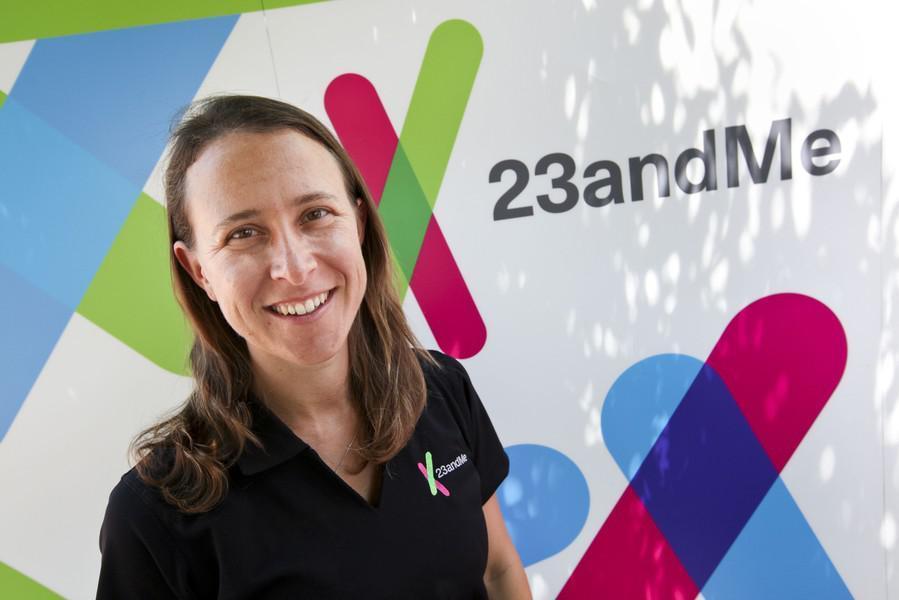
23andMe CEO Anne Wojcicki

23andMe CEO Anne Wojcicki

From my Forbes blog:

More than a year after the Food and Drug Administration barred 23andMe from marketing a broad-based genetic testing service, it looks like the FDA plans to shift gears and allow such tests to be sold directly to consumers.

The announcement came in a release late Thursday from the regulator that said it’s authorizing 23andMe to market a specific test to consumers for Bloom Syndrome, a rare inherited disorder associated with short stature and various cancers that often result in death by the mid-20s. The genetic testing company had submitted the test for FDA approval last June.

But the agency then proceeded to lay out broader plans for reversing its stance on direct-to-consumer tests to screen for genetic carriers of diseases. Until now, the FDA had treated such tests as medical devices, which required a much longer and more rigorous approval process for each disease test. Now, the agency says it’s willing to allow these tests to be sold without specific FDA approval. The move is specifically for autosomal recessive diseases that a person who may display no symptoms of the disorder could pass along to offspring.

It’s not yet clear how sweeping the FDA’s move is, and it may not happen all that soon. It still needs to come out with a specific notice of what it intends to require, which will be followed by a 30-day public comment period and then implementation. In a blog post, CEO Anne Wojcicki called the Bloom Syndrome test approval “an important first step [her emphasis] in fulfilling our commitment to return genetic health reports to consumers in the US.”

She also told Bloomberg that she expected to be able to sell the company’s test with some health analysis later this year, with health reports updated as 23andMe gets more approvals for other disease analysis. In a release, the company added, “23andMe will not immediately begin returning Bloom syndrome Carrier Status test results or other health results to customers until it completes the regulatory process for additional test reports and can offer a more comprehensive product offering.”

Still, it’s not yet clear that 23andMe can sell its genetic tests for as wide a variety of diseases all at once as it once did, according to FDA press officer Jennifer Dooren, reached late tonight. …

Read about the broader implications in the full post.

Yahoo Woos Mobile App Developers In Hopes Of Boosting Ad Business

Yahoo CEO Marissa Mayer

Yahoo CEO Marissa Mayer

From my Forbes blog:

Yahoo wants app developers to know it really, really likes them. But even if they return the affection, will that be enough to turn the company around?

Today, at its Mobile Developer Conference in San Francisco, the Internet company rolled out a suite of new products and services aimed at helping mobile app developers make money. It’s the latest and most aggressive move in a two-year effort to prove that it has fully joined the mobile revolution.

More than 1,000 mobile app developers gathered to hear how the still struggling Internet company plans to help them acquire, analyze and make money from users through advertising, app purchases, and other means. Yahoo billed the conference as the first annual, but it’s an outgrowth of an annual conference held for years the mobile analytics and ad network Flurry, which Yahoo bought last year. That was clear when Flurry CEO Simon Khalaf got somewhat more enthusiastic cheers from the audience than Mayer when he was introduced.

Yahoo offers the software tools–including a way for apps to embed in their software Yahoo search, video and so-called native ads that match the context where they’re running, as well as a new analytics dashboard from Flurry–for free. In return, it hopes the apps, 630,000 of which use Flurry’s software, will run its ads, for which they get 60% of the revenues. Yahoo hopes that will vastly expand the places its ads run, especially on mobile devices where people increasingly spend most of their time and, increasingly, money online. That in turn could make Yahoo more attractive to advertisers. …

Read more details in the full post.

The One Missing Ingredient In Facebook’s All-Out Drive For TV Ad Dollars

From my Forbes blog:

Beyond plans to spend like crazy on everything from search to virtual reality, Facebook gave investors little to complain about in its fourth-quarter results reported Jan. 28. Ad revenues jumped a stunning 53%, and they would have been five points higher but for currency fluctuations. Mobile ads rose to 69% of those revenues, up from 53% a year ago, a sure sign of the company’s progress in making advertising on phones and tablets compelling. Annual revenues blew past $10 billion for the first time.

But investors pay for future profits, so it’s important to step back a bit and assess how well Facebook is positioned vs. an always-growing pack of rivals–Snapchat, Pinterest, Google and YouTube, Twitter, and yes, even Yahoo. In particular, it’s not yet clear that Facebook has cracked the opportunity for brand advertising, the kind of image ads that dominate television, where most advertising dollars are still spent.

What’s the problem? One ad agency executive I talked to has an idea, and it involves not only advertising but the reality of Facebook’s core service, its news feed. The issue, says Craig Elimeliah, senior vice president and director of creative technology at RAPP, is that Facebook has saturated its most lucrative audience, the U.S. and to some extent Europe. There’s the rest of the world, but CEO Mark Zuckerberg says the Internet.org effort to get them online is one of Facebook’s 10-year projects, not three to five years.

To keep growing–not just audience but time spent on the site, which leads to revenues–Facebook must give people more reasons to use it than they have, Elimeliah says. While Facebook has frequently changed up the look and the algorithms of the news feed, we’re still doing basically the same things on it that we have for years: watching a bunch of cat videos, fake news stories from the Onion, and photos from friends. Nothing wrong with all that, but it’s pretty passive, especially for a social network in the hyperconnected age of Snapchat.

“They really haven’t evolved the engagement on the platform much,” says Elimeliah. “There’s a lot of noise and clutter.” He thinks the rise of Snapchat shows how young people want closer, more immediate interactions with friends, and advertising that works in that context. Indeed, Elimeliah says he’s “blown away” by Snapchat Discover, its just-announced content and advertising service (check out the video below). The “low-friction” experience is already getting kudos from media types. “It blows Facebook out of the water from an engagement standpoint,” he says, because it fits so well into the intimate and yes, ephemeral Snapchat service.

Facebook needs to make sure it provides the right context for those ads–a place where ads not only seem natural but play in a context that isn’t quite as noisy and distracting as the current news feed. Video ads also seem unlikely to be effective unless they are made to be consumed on the go and provide actionable information–so they can’t be simply downsized TV spots. “I don’t know if the Facebook platform can make that kind of change,” Elimeliah says. …

Read the full story.

This Man’s Betting On The Technology Behind Apple Pay – And Even He Says It’s Years Away From Wide Adoption

Osama Bedier, founder and CEO of Poynt

Osama Bedier, founder and CEO of Poynt

From my Forbes blog:

When Apple CEO Tim Cook unveiled Apple Pay in September, he predicted that it would “forever change the way all of us buy things.” As I wrote in a recent post, while he ultimately might be proven right, Apple’s mobile wallet is likely to take years to catch on widely.

Although that assessment is nearly universally accepted among people who actually know how payments work, I got a lot of pushback on that from Apple fanatics as well as at least one Forbes contributor.

So I decided to ask someone who has bet at least partly on Apple Pay’s eventual success: Osama Bedier, a former vice president at both PayPal and Google, where he headed the search giant’s mobile wallet effort. Bedier is now founder and CEO of Poynt, which just announced plans to build a slick-looking smart point-of-sale terminal that can take most existing forms of payment–including those facilitated by Near Field Communication, the method used in both Apple Pay and Google Wallet to send data from a smartphone to the register. Suffice to say, when it comes to payments, Bedier not only knows what he’s talking about, he’s pretty agnostic about the many competing mobile payment methods.

His take? To start with the positive, he says Apple’s timing looks good–not a surprising take, since Bedier’s making the same bet that the timing is right. “Apple is good at jumping on bandwagons they think could take off,” he says. That’s in contrast, he notes, to Google, which “gets infatuated with technology”–though he also says that Google Wallet helped kickstart a move by tens of thousands of retail outlets to install NFC-capable readers.

Still, Bedier says, Apple Pay “isn’t going to happen next year. It’s going to take four years before it happens everywhere.” What’s more, Apple Pay works only on iPhones (and eventually Apple Watches), and that’s unlikely to change soon, so Apple Pay won’t be a standard except for iPhones. …

Read the rest of the story.